
The Flatiron Building: A Landmark Reemerges in the Heart of NYC
Few buildings capture the imagination of New York City quite like the Flatiron Building. Instantly recognizable by its striking triangular shape and elegant Beaux-Arts design, this iconic structure has stood at the intersection of Broadway, Fifth Avenue, and 23rd Street for over a century. For locals, commuters, and visitors alike, it’s more than just a building—it’s a symbol of New York’s architectural ambition and enduring character.
At Broadway Suites, we’ve always valued our connection to the city’s most historic and vibrant neighborhoods. The Flatiron District, in particular, represents a unique blend of old-world charm and modern energy. However, for the past several years, one of its most defining landmarks has been partially hidden from view.
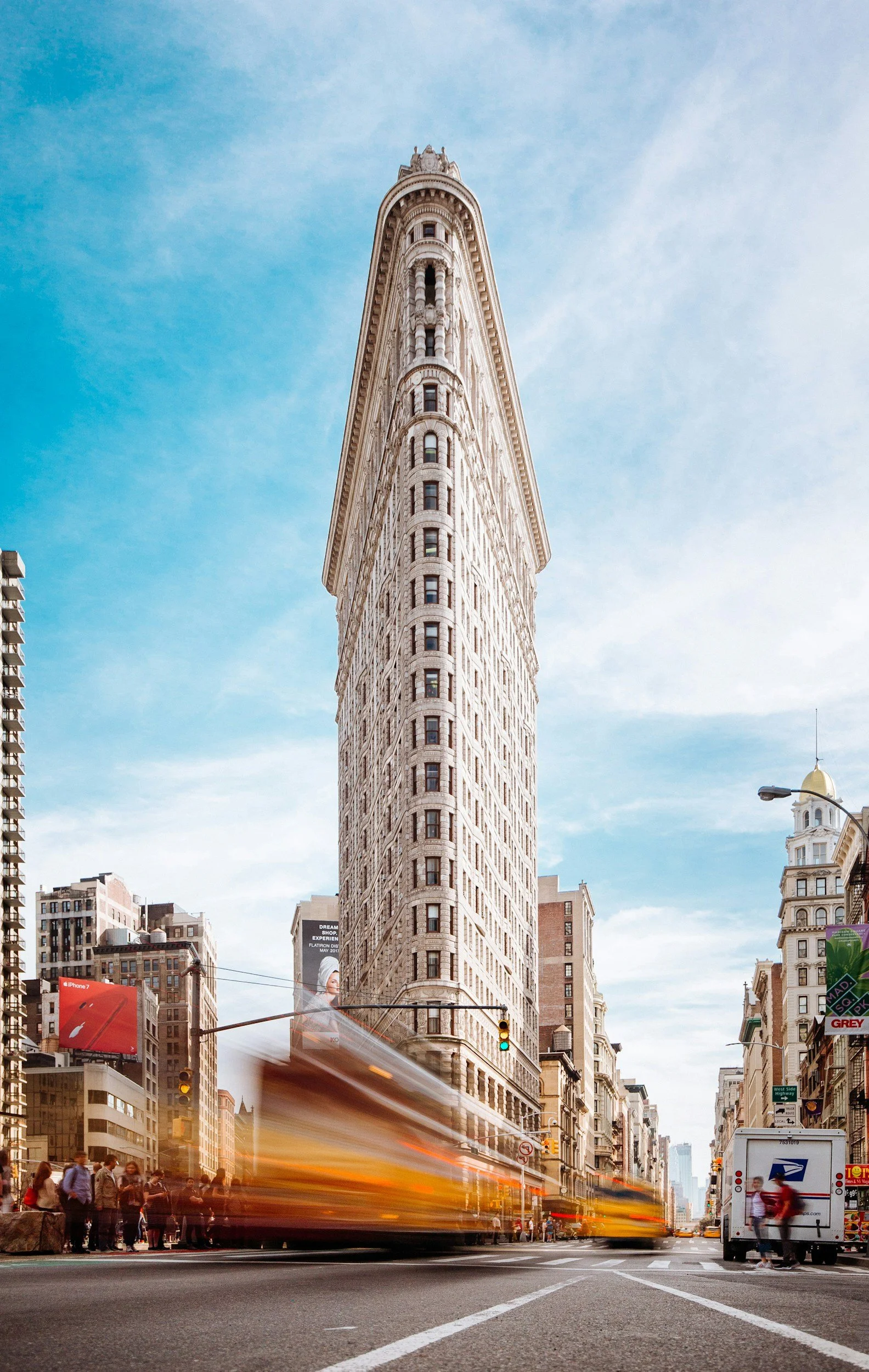
A Building Ahead of Its Time
Completed in 1902, the Flatiron Building was one of the first skyscrapers ever constructed in New York City. Designed by renowned architect Daniel Burnham, it quickly became a marvel of engineering and design. At just 22 stories tall, it may seem modest by today’s standards, but at the time, its steel-frame construction and bold silhouette made it revolutionary.
The building’s unique wedge shape—dictated by the triangular plot of land it occupies—earned it the nickname “Flatiron,” as it resembled the cast-iron clothes irons of the era. Over the decades, it has become one of the most photographed buildings in the world, a testament to its timeless appeal.
Image provided by Squarespace free stock images
The Era of Scaffolding
In recent years, however, the Flatiron Building has been largely obscured by scaffolding. What began as necessary safety measures evolved into a prolonged period of concealment, leaving many to wonder when they would once again see the building in its full glory.
The scaffolding was initially installed to address façade concerns—an essential step in preserving the building’s structural integrity and ensuring public safety. Like many historic buildings in New York, the Flatiron requires ongoing maintenance to meet modern standards while preserving its original character.
However, the extended presence of scaffolding has had a noticeable impact on the surrounding area. The once-open views of the building have been replaced by metal frameworks and netting, altering the visual landscape of the district. Businesses nearby have felt the change as well, with reduced foot traffic and fewer photo opportunities drawing visitors to the area.
For a neighborhood that thrives on energy, tourism, and aesthetic appeal, the scaffolding has been more than just a construction inconvenience—it has been a temporary shift in identity.
The Impact on the Flatiron District
The Flatiron District has long been known for its vibrant mix of offices, retail, dining, and public spaces. The building itself serves as a central anchor, both visually and culturally. When that anchor is partially hidden, the ripple effects are felt throughout the neighborhood.
Local businesses have had to adapt, finding new ways to attract visitors and maintain engagement. Meanwhile, residents and workers have grown accustomed to navigating a streetscape that feels slightly less open, slightly less iconic.
Yet, despite these challenges, the neighborhood has remained resilient. In many ways, the anticipation surrounding the building’s restoration has created a renewed sense of excitement and curiosity. People aren’t just waiting for the scaffolding to come down—they’re looking forward to a reintroduction of a beloved landmark.
The Unwrapping Begins
Now, that long-awaited moment is finally taking shape.
According to a recent report by New York YIMBY, scaffolding removal has officially begun on the Flatiron Building, marking a major milestone in the restoration process. As detailed in the article, crews have started dismantling sections of the protective framework, gradually revealing portions of the building’s historic façade that have been hidden for years.
Rather than a single unveiling, the process is expected to happen in phases. This measured approach ensures safety while allowing the public to witness the building’s return piece by piece. Early glimpses already hint at the restoration work completed beneath the scaffolding—cleaned stonework, repaired detailing, and a renewed architectural presence that feels both historic and refreshed.
This development signals more than just construction progress—it represents the beginning of the Flatiron Building’s reintroduction to the cityscape. Each removed section of scaffolding brings back a piece of New York’s visual identity.
A Moment Worth Waiting For
When the scaffolding finally comes down, it won’t just mark the end of a construction project—it will signal the return of one of New York City’s most treasured landmarks.
For those who live and work nearby, it will be a rediscovery. For visitors, it will be a chance to experience the Flatiron Building as it was meant to be seen: unobstructed, elegant, and inspiring.
At Broadway Suites, we see this as more than just a visual transformation. It’s a reminder of the city’s ability to preserve its history while continuing to evolve. The Flatiron Building has stood the test of time, and its reemergence will once again reinforce its place at the heart of New York City.
Looking Ahead
As the Flatiron Building prepares for its next chapter, the entire district stands to benefit. Increased foot traffic, renewed interest, and a restored sense of place will breathe fresh energy into the area.
For businesses, professionals, and entrepreneurs, this moment represents opportunity. Being part of a neighborhood that blends historic significance with modern momentum is something truly special—and it’s a key part of what makes Broadway Suites such a compelling place to work.
The Flatiron Building has always been a symbol of innovation and resilience. And now, as its iconic façade is gradually revealed once more, it stands ready to reclaim its place as one of New York City’s most captivating sights—fully visible, fully restored, and once again inspiring all who pass by.
Office Space in the Heart of Flatiron

As the Flatiron District enters this exciting new chapter, Broadway Suites is proud to be part of its continued growth and energy. With two prime locations in the neighborhood dedicated to office space, we offer businesses the opportunity to work just steps away from one of New York City’s most iconic landmarks.
Our suites are designed to meet the needs of modern professionals—whether you’re a startup, an established company, or a growing team looking for flexibility and convenience. From private offices to shared environments, Broadway Suites provides thoughtfully designed workspaces that balance functionality with comfort.
Beyond the office itself, it’s about location. Being in the Flatiron District means access to some of the city’s best dining, transportation, and business networks—all within walking distance. And with the Flatiron Building soon returning to full view, the neighborhood is poised for renewed vibrancy and increased foot traffic.
For those looking to establish or expand their presence in one of Manhattan’s most dynamic areas, Broadway Suites offers not just office space, but a place to be part of what’s next.