
The Potential Expansion of Penn Station
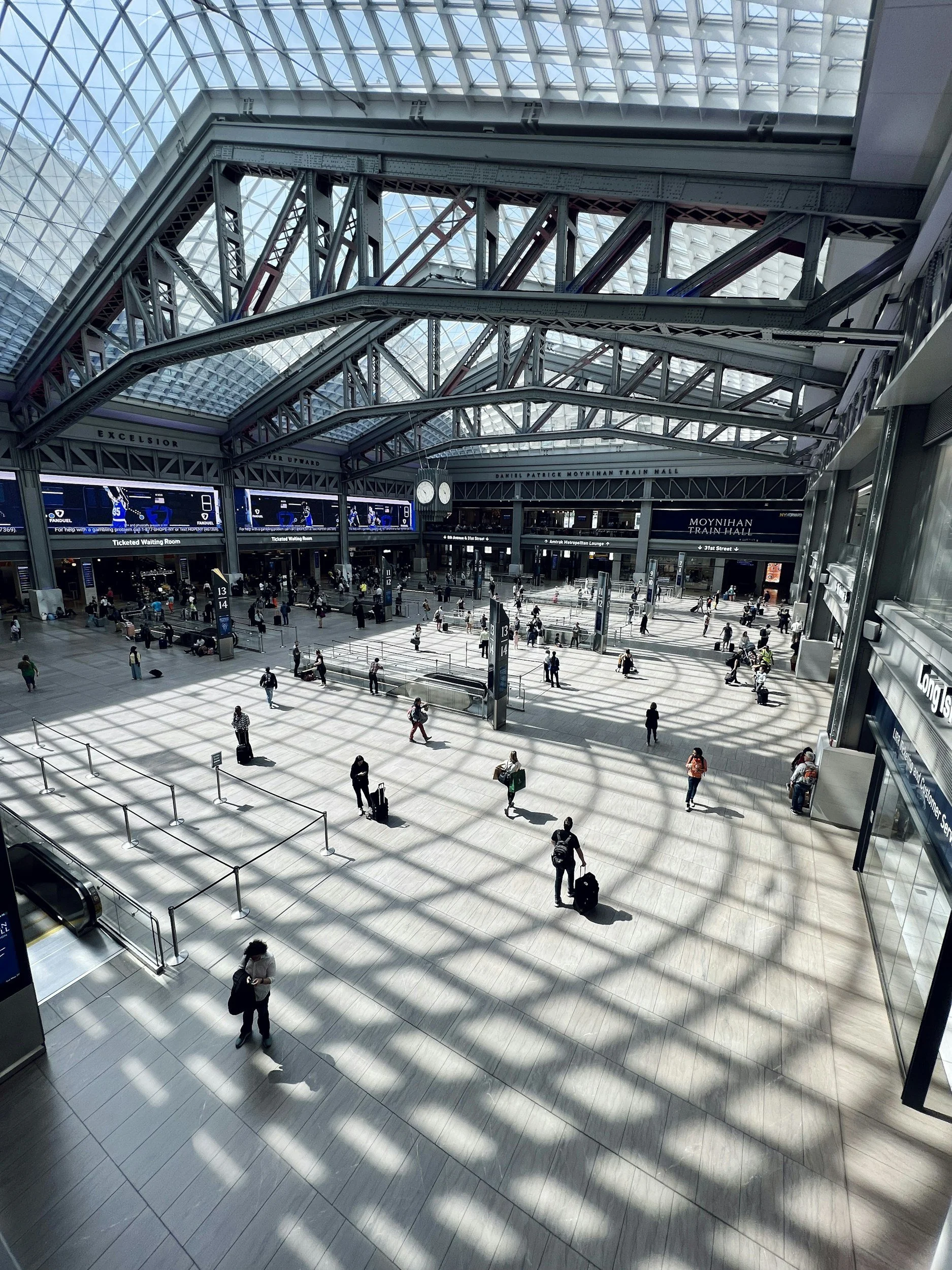
Image Provided by Squarespace Free Images
Penn Station in New York City has long been one of the most criticized yet essential transportation hubs in the United States. It’s crowded, chaotic, outdated — and still absolutely unavoidable for millions of commuters. Now, with renewed plans for expansion and redevelopment, it sits at the center of a larger question: what does a modern transit hub in a global city actually look like?
A Station That No Longer Matches Its City
Penn Station was never designed for the scale it handles today. Built for a different era, it now serves hundreds of thousands of daily riders moving through tight corridors, low ceilings, and confusing layouts. The experience is often frustrating, yet the station continues to function as one of the most important connective points in the country.
It’s a paradox: a space that feels overwhelmed, yet remains essential. And that tension is exactly why it has become a priority for redesign discussions.
Governor Hochul’s Vision for a New Penn Station
A major driver of the current redevelopment conversation is New York Governor Kathy Hochul’s plan for a “New Penn Station.” Her proposal calls for transforming the existing station into a modern, commuter-first transit hub with more space, better flow, and a dramatically improved passenger experience.
The plan includes rebuilding Penn Station into a single-level, light-filled train hall with higher ceilings, wider corridors, and improved navigation to make movement through the station more intuitive and less congested. It also emphasizes upgrading the surrounding Penn District, adding public space and encouraging new development around the station footprint.
In addition, Hochul’s vision ties the station’s future to broader urban redevelopment, suggesting that Penn Station should not just be fixed — but reimagined as the centerpiece of a revitalized neighborhood.
What Expansion Could Actually Change
Beyond aesthetics, expansion is fundamentally about capacity and flow. A redesigned Penn Station would allow for more efficient movement of passengers, reducing bottlenecks that currently define peak travel hours.
Improved layouts, expanded concourses, and clearer circulation paths would change the daily commuter experience in a tangible way. Instead of a space defined by compression and confusion, the station could become a more open, navigable environment designed for high-volume traffic.
At a system level, this matters. Penn Station is one of the busiest transit hubs in the Western Hemisphere, and even small efficiency gains translate into massive improvements for regional mobility.
The Economic Ripple Effect
Any expansion of Penn Station would also reshape the surrounding economy. Transit hubs are powerful economic engines because they concentrate foot traffic at an extreme scale.
A more functional and attractive station could increase demand for retail, food services, and commercial development in the area. Businesses rely heavily on commuter density, and Penn Station already sits at one of the highest-traffic zones in the country.
In that sense, improving the station isn’t just about transportation — it’s about unlocking economic potential that already exists but is currently constrained by outdated infrastructure.
The Challenge Ahead
Of course, turning vision into reality is never simple. Large infrastructure projects in New York City face political hurdles, funding debates, construction disruption, and competing design priorities. Even with strong momentum, change will be slow.
Impact on Entrepreneurs and Local Workspaces
Improving Penn Station could make the surrounding area much more accessible for entrepreneurs and small businesses. A faster, smoother commute would make it easier to work in and around the station instead of avoiding it.
Spaces like Broadway Suites, which offer private office spaces near Penn Station, become more valuable in this kind of environment. Being close to a major transit hub means easier client meetings, better networking access, and less time spent commuting.
If Penn Station is expanded and modernized, it wouldn’t just improve travel — it would make the area more practical for people trying to build and run businesses in the city.
To see how a private office space near this major transit hub could work for you, book a tour with Broadway Suites today and discover a workspace built for convenience, access, and growth.
